Where is the sorting efficiency of the automatic matrix sorting chute reflected
1�、 High throughput parallel processing significantly increases unit production capacity
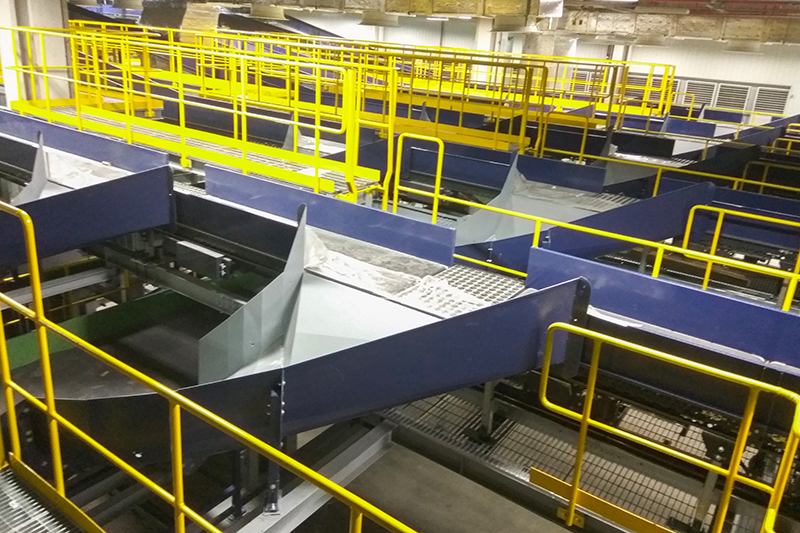
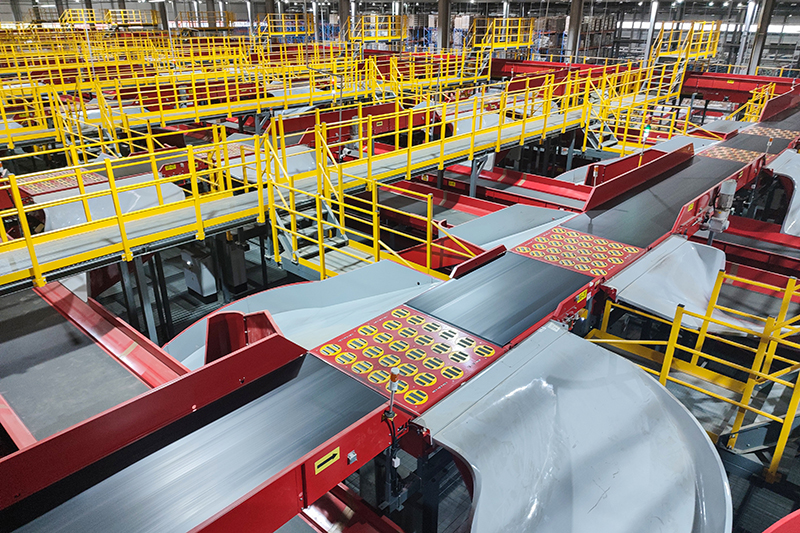
The automatic matrix is a multi line vertical and horizontal array+multi chute parallel sorting architecture, with multiple incoming lines synchronously supplying packages and multiple chutes simultaneously unloading goods, forming batch parallel sorting capabilities.
1�����、 High throughput parallel processing significantly increases unit production capacity
The automatic matrix is a multi line vertical and horizontal array+multi chute parallel sorting architecture, with multiple incoming lines synchronously supplying packages and multiple chutes simultaneously unloading goods, forming batch parallel sorting capabilities.
Automated matrix balance wheel+sliding groove combination, single line stable production capacity can reach 4000-6000 pieces/hour, multi line matrix combination easily achieves tens of thousands of pieces/hour processing capacity; A single person can only produce 200-300 pieces per hour, increasing the overall production capacity by several times to more than ten times.
High level incoming lines, multi-level staggered three-dimensional layout, with a large number of vertical space stacking chute grids. Dozens to hundreds of flow direction slides can be arranged on the same plane, and packages can be distributed from all directions across the country without single channel congestion bottlenecks.
2���、 Gravity powered conveying, no waiting for circulation, continuous and stable rhythm
The chute relies on gravity to slide down and transport, eliminating the need for belts and motors to continuously drive and wait for transfer. The entire flow cycle is compact:
The package is automatically pushed into the chute by the balance wheel/module and slides down autonomously without any secondary transportation or manual movement; The end of the chute is directly connected to the collection bag and the telescopic loading machine, and the sorting → cargo collection → loading process is completed in one go. When cutting off the middle movers.
Can match a high-speed mainline conveying speed of 2.3m/s, without slowing down during peak acceleration; Unlike manual sorting, which is hindered by physical exertion, hand changes, and stacking of goods, the equipment can operate continuously 24 hours a day, with full day and night production capacity.
The lining of the flexible chute reduces friction and slows down impact, reducing the probability of cargo jamming and material blockage. The downtime for cleaning is much shorter than that of the old-fashioned belt sorting line, and the proportion of effective operating time is higher.
3���、 Intensive three-dimensional space, converting site utilization into sorting efficiency
The matrix chute is arranged in layers based on the height difference, transforming the flat space into multiple sorting channels:
Traditional flat sorting lines occupy a large area and have few flow directions; The matrix has high-level incoming lines and low-level outgoing lines, with multiple layers of dense chutes above and below. With the same factory area, the number of sorting gates can be increased by 2-3 times, and the same site can accommodate higher daily orders (the million piece sorting center is equipped with three layers of matrix chutes as standard).
The end of the chute is directly connected to the loading telescopic machine, and the package slides to the side of the carriage without the need for a forklift to rotate the transport pallet. The efficiency of the loading process is synchronously improved by more than 30%.
4�、 Fully automatic identification and allocation of goods, high accuracy and low error correction time
The entire system is linked with DWS weighing and volume measurement, 360 ° scanning, and PLC automatic wheel allocation chute:
Scan code recognition is completed in 0.1 seconds, and the system matches the corresponding flow chute. The sorting accuracy is stable at 99.99%; The manual misclassification rate is high, and subsequent rework and re sorting will consume a large amount of effective production capacity.
Equipped with a misclassification alarm and an abnormal part return chute, the wrong parts automatically return to the re inspection line without the need for all staff to stop and manually search, and the error correction loss time is almost negligible.
5、 Simplify manpower and reduce human efficiency fluctuations
Only a small number of personnel are needed to monitor abnormal items and collect packaging bags in the front-end; Under the same throughput, manpower is reduced by 70% -80%, and there is no capacity decline caused by labor fatigue, shift changes, or leave requests.
Workers only do auxiliary packaging and do not need to pick up and sort goods back and forth. Single person assistance can handle tens of thousands of daily processing volumes, greatly increasing per capita output.
6�����、 Flexible adaptation across all categories, reducing downtime and changeover losses
High density chutes are compatible with soft bags, woven bags, cardboard boxes, large luggage, and building materials:
Irregular, large, and overweight goods are less likely to get stuck and do not require frequent switching of sorting modes; Compared with the strict restrictions on component types in the cross belt, the coarse sorting scenario of the matrix chute is more adaptable, and the mixed running of large, medium, and small components does not require separate line isolation, reducing downtime for changing lines.
Modular chutes can quickly increase or decrease grid openings, adjust slopes, and when adding temporary flow directions or new urban routes during e-commerce promotions, the transformation and debugging are fast, and peak production capacity can be quickly expanded.
7�、 Low energy consumption, low operation and maintenance, long-term stable output with high efficiency
The main body of the chute does not have a continuously running motor, only the front balance wheel/module consumes electricity, saving about 80% of overall energy consumption compared to a full belt sorting line, and will not slow down due to high load heating.
The structure is simple, wear-resistant, easy to clean, and has a low frequency of failures. The annual downtime for maintenance is much less than that of cross belt and slider machines, and the effective operating days are more throughout the year. The overall annual sorting volume is higher.

 18151596636



 Home
Home
 Product
 Wechat
 Telephone